
Introduction
Urban infrastructure is evolving rapidly, and lighting systems are at the heart of this transformation. Traditional street lighting has long been a major expense for municipalities and industrial zones — both in terms of energy consumption and maintenance costs.
That’s why the Automatic Street Light Project has become a key component in today’s smart city revolution. Combining automation, IoT connectivity, and sustainable energy management, this project offers a practical solution to reduce costs and improve efficiency.
In this article, we’ll explore the technical foundations, cost benefits, and real-world impact of automatic street lighting — and why investing in an IoT-based smart lighting system is one of the smartest infrastructure decisions a city or company can make.
1. What Is an Automatic Street Light Project?
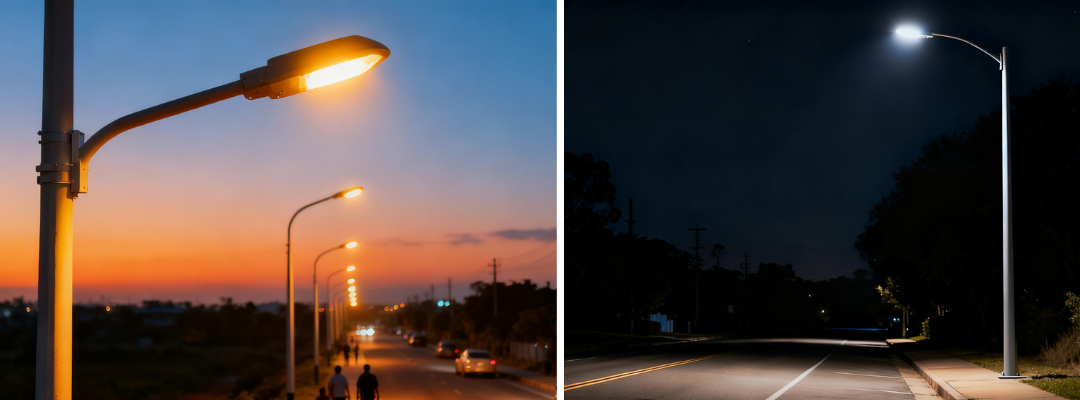
An Automatic Street Light Project is a system designed to turn street lights on or off automatically based on environmental conditions such as daylight intensity, motion, or network commands.
Unlike traditional lighting systems that rely on manual switches or fixed timers, automatic systems use sensors and controllers to detect when lighting is required — ensuring illumination only when necessary.
How It Works
There are three main control technologies used in automatic street light systems:
-
LDR (Light Dependent Resistor) Based Systems:
The most common and simplest form. The LDR detects ambient light levels — turning lamps on at dusk and off at dawn. It’s inexpensive and easy to install, but offers limited flexibility. -
PIR (Passive Infrared Sensor) Based Systems:
These lights respond to motion, typically used in parking lots or low-traffic roads. They activate only when vehicles or pedestrians are detected, reducing energy waste during off-peak hours. -
IoT-Based Smart Systems:
The most advanced version, using Internet of Things technology to remotely control, monitor, and analyze every street light in a network. These systems are fully programmable, integrate with solar charge controllers, and provide real-time fault detection.
Core Components
-
Solar Panels (optional) for energy independence
-
Charge Controllers for power management
-
Sensors (LDR, PIR, current sensors)
-
Microcontrollers or IoT Gateways
-
Cloud or Centralized Management Platform
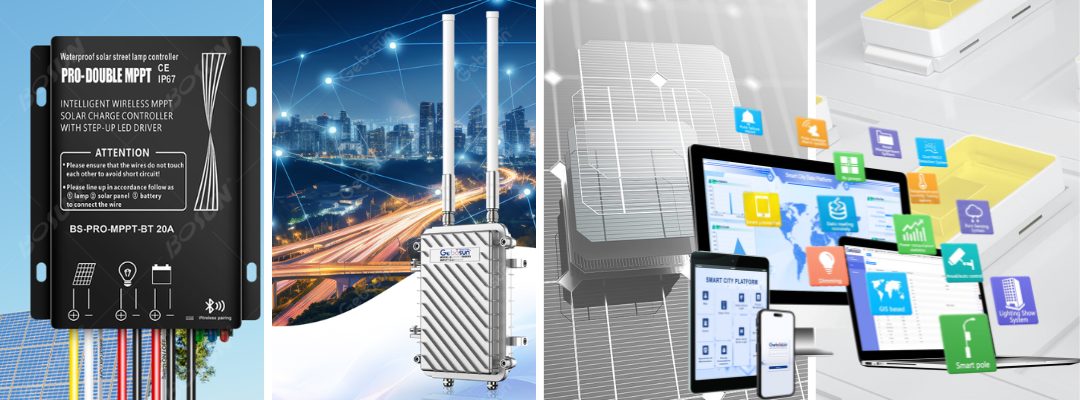
Gebosun’s IoT solar charge controller, for example, allows city engineers to monitor lamp status, voltage, and battery health remotely — reducing manual inspection costs.
2. Can an Automatic Street Light Project Really Save Money?
Absolutely — and the savings are both direct (electricity costs) and indirect (maintenance and labor).
Let’s break it down.
Direct Energy Savings
Traditional street lights run at 100% power all night, regardless of traffic volume or environmental conditions. Automatic systems, on the other hand, adjust light levels dynamically.
For example:
-
Dimming to 50% during low-traffic hours saves roughly 40–50% of electricity.
-
Motion-based (PIR) systems can save up to 70%.
-
IoT-integrated systems with smart scheduling and sensor feedback can achieve up to 80% savings compared to conventional setups.
Case Example:
A mid-sized Indian town with 1,000 LED street lights consuming 100W each:
-
Traditional system: ~100,000 kWh per month.
-
IoT-based automatic system: ~25,000–30,000 kWh per month.
→ Energy cost reduction: ≈70%.
→ Monthly savings: over USD $7,000 (assuming $0.10/kWh).
Indirect Cost Savings
-
Reduced maintenance visits: Fault alerts are sent automatically.
-
Extended lamp lifespan: Optimized usage and reduced overheating.
-
Less manpower needed: One operator can manage thousands of lights remotely.
In short: An Automatic Street Light Project doesn’t just save electricity — it transforms operational efficiency.
3. What’s the Difference Between LDR, PIR, and IoT Street Light Projects?
| Feature | LDR-Based | PIR-Based | IoT-Based |
|---|---|---|---|
| Trigger Mechanism | Light intensity | Motion detection | Network + sensors |
| Cost | Low | Medium | High (initial) |
| Energy Saving | 20–30% | 40–70% | 60–80% |
| Control Flexibility | Basic | Moderate | Advanced (custom scheduling, dimming) |
| Remote Monitoring | No | No | Yes |
| Fault Detection | Manual | Manual | Automatic |
| Best For | Small-scale, rural areas | Residential zones | Smart cities, large highways |
While LDR and PIR systems are cost-effective entry options, IoT-based controllers are the future of smart infrastructure.
Gebosun’s IoT solution uses wireless communication (LoRa or NB-IoT) to send real-time data to a central dashboard — offering visibility into lamp status, power consumption, and faults across the entire grid.
4. Beyond Power Savings: What Other Benefits Do Automatic Street Light Projects Offer?
Energy savings are only part of the story. The Automatic Street Light Project also improves public safety, sustainability, and infrastructure intelligence.
1. Enhanced Safety and Visibility
Consistent, well-managed lighting reduces traffic accidents and enhances nighttime visibility for pedestrians and drivers.
2. Faster Fault Response
With IoT monitoring, the system reports faults immediately, allowing engineers to fix only what’s broken — not inspect every pole.
3. Sustainability
Reduced electricity use means lower carbon emissions. When combined with solar systems, the project can reach net-zero energy consumption.
4. Data Analytics for Smart Cities
Collected data (e.g., energy patterns, fault trends) can guide better urban planning and resource allocation.
5. Scalable Integration
Automatic lighting systems can integrate with:
-
Smart traffic sensors
-
Weather monitoring stations
-
CCTV and public Wi-Fi
This makes them an integral part of the smart city ecosystem.
5. Is the Initial Cost of IoT Smart Street Lights Worth It?
Upgrading to an IoT-based system does require a higher initial investment — typically 20–40% more than standard lighting setups. But the ROI (Return on Investment) is exceptional.
Cost Comparison Example
| Category | Traditional System | IoT Smart System |
|---|---|---|
| Installation Cost | $200 per lamp | $280 per lamp |
| Monthly Power Cost | $10 | $3 |
| Maintenance Cost | $5 | $1 |
| 3-Year Total Cost | $630 | $412 |
Within 12–18 months, the project usually pays for itself through energy savings and reduced maintenance.
Moreover, remote monitoring avoids unnecessary site visits — saving fuel, labor, and time. In large-scale deployments (over 1,000 units), the total operational savings can reach tens of thousands of dollars per year.
So yes, the initial cost is absolutely worth it — especially for municipalities planning long-term smart infrastructure.
6. Is the Automatic Street Light Project Part of a Smart City?
Yes — in fact, it’s one of the most fundamental building blocks of a smart city ecosystem.
How It Fits In
Smart cities rely on real-time data, connectivity, and automation to manage infrastructure efficiently. Street lighting networks, being widespread and power-intensive, are perfect candidates for IoT integration.
By adopting automatic street lighting:
-
Cities improve energy management.
-
Maintenance becomes predictive instead of reactive.
-
Safety, sustainability, and data visibility are enhanced.
These systems can connect with traffic flow sensors, pollution monitors, public Wi-Fi hotspots, and emergency communication modules — creating a unified digital infrastructure.
Real-World Example: Gebosun’s Smart Lighting Deployment
In a pilot project in South Asia, Gebosun deployed over 500 solar-powered street lights equipped with IoT solar charge controllers.
Results:
-
68% reduction in monthly energy use.
-
85% fewer manual inspection visits.
-
Fault response time reduced from 48 hours to 6 hours.
-
ROI achieved in 14 months.
This case demonstrates how integrating solar energy + IoT control + automation can revolutionize public lighting infrastructure.
Frequently Asked Questions (FAQ)
1. What is an Automatic Street Light Project?
It’s a lighting system that automatically turns street lights on or off based on sensors or network control, eliminating the need for manual operation.
2. Can automatic street lights really save money?
Yes. Depending on the design (LDR, PIR, IoT), they can reduce electricity costs by 40–80% and cut maintenance expenses significantly.
3. What’s the difference between LDR, PIR, and IoT systems?
LDR systems detect light intensity, PIR detects motion, and IoT systems use network control for full automation and data monitoring.
4. Besides saving electricity, what other benefits do they offer?
Improved safety, faster maintenance, environmental sustainability, and smart city integration.
5. Is the IoT-based system too expensive for small cities?
No. While initial costs are higher, payback occurs within 1–2 years through energy and maintenance savings.
6. How does this project relate to smart cities?
Automatic street lighting is a key part of smart cities — enabling intelligent control, data analytics, and real-time infrastructure management.
Conclusion: Lighting the Path to a Smarter Future
The Automatic Street Light Project isn’t just about automation — it’s about building a cost-efficient, sustainable, and connected lighting ecosystem for the future.
By leveraging IoT-based solar charge controllers and intelligent monitoring platforms like Gebosun’s, cities and enterprises can reduce costs, enhance reliability, and move closer to true smart infrastructure.
Post time: Nov-05-2025
