
Branch-Inspired Smart Lighting Pole for Smart City Infrastructure and Public Space Enhancement


Branch-Like Smart Outdoor Lighting Pole for Urban Cityscape Applications
Branch-like smart outdoor lighting represents a new generation of urban infrastructure design, combining functional lighting, intelligent city services, and landmark aesthetics into a single modular system. Unlike conventional light poles, this intelligent pole adopts an organic, tree-inspired structure, making it particularly suitable for cityscapes where visual integration and multi-functionality are equally important.

Core Value for Urban Planners and Municipal Authorities
Urban Aesthetics and City Identity
- The branch-like design introduces a natural, sculptural element into urban environments, making the pole suitable for:
- Iconic city entrances and civic plazas
- Cultural and tourism districts
- Waterfront and green corridor developments
- High-end commercial and residential zones
Integrated Smart City Service Node
- Each intelligent pole acts as a centralized mounting and power platform, capable of supporting multiple city functions:
- High-efficiency LED outdoor lighting
- Smart video surveillance and security monitoring
- Public WiFi and wireless communication equipment
- Environmental monitoring (air quality, noise, weather)
- Emergency communication and public broadcasting
- Digital information displays and control systems

Intelligent Lighting and Centralized Management
The system supports integration with smart city control platforms, enabling:
- Remote lighting control and dimming strategies
- Time-based, sensor-based, or event-based lighting adjustment
- Real-time equipment status monitoring
- Data collection for urban management decision-making
Modular Engineering for Long-Term Scalability
The branch-style intelligent pole is engineered with modular interfaces, allowing:
- Flexible branch configurations and heights
- Custom device combinations based on project needs
- Future technology upgrades without full pole replacement


Typical Application Scenarios
Smart city pilot and demonstration zones
- Urban renewal and streetscape renovation projects
- Public parks and ecological corridors
- Pedestrian-focused commercial streets
- University campuses and science parks
- Government and municipal landmark areas
Advantages for Procurement and Engineering Projects
- Reduces total infrastructure footprint
- Enhances public safety and service accessibility
- Supports smart city digital transformation goals
- Improves urban visual coherence
- Lowers long-term operational and maintenance costs


The branch-like smart outdoor lighting intelligent pole represents a strategic shift in urban infrastructure—from isolated lighting assets to integrated, data-enabled public service platforms. It enables cities to improve functionality, sustainability, and visual identity simultaneously, making it a strong solution for future-ready urban development.


Frequently Asked Questions about Smart Pole
What types of projects are best suited for branch-like smart lighting poles?
These poles are ideal for public spaces where aesthetics and functionality must coexist, such as plazas, parks, tourism areas, and high-visibility urban landmarks.
Can the pole configuration be customized for different cities or projects?
Yes. Pole height, branch layout, lighting fixtures, and integrated smart devices can be customized to meet local standards, environmental conditions, and project objectives.
How does this solution support smart city system integration?
The pole is designed to integrate with mainstream IoT and smart city platforms, enabling centralized control, data sharing, and unified system management.
What materials ensure durability in outdoor environments?
High-strength steel or aluminum alloys with anti-corrosion coatings are typically used to ensure resistance to wind load, humidity, UV exposure, and urban pollution.
Is this product suitable for large-scale municipal deployment?
Yes. The design supports standardized manufacturing and scalable deployment, making it suitable for city-level infrastructure projects and long-term urban planning initiatives.
How does a multi-functional smart pole reduce operational costs?
By integrating multiple systems into one structure, cities reduce installation duplication, cabling complexity, and manual maintenance, resulting in lower lifecycle costs.
Products categories
-

Future-Proof NEMA Controller for Smart Street L...
-
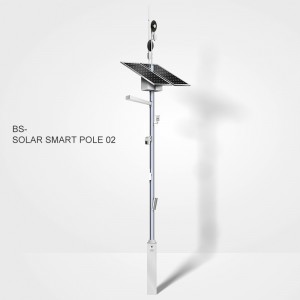
Gebosun BS-Solar Smart Pole 02 & Smart City
-
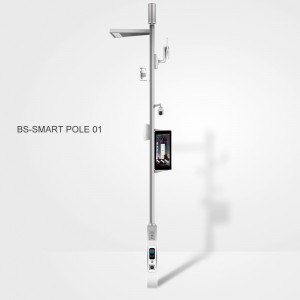
Gebosun Smart Pole 01 for Smart City
-
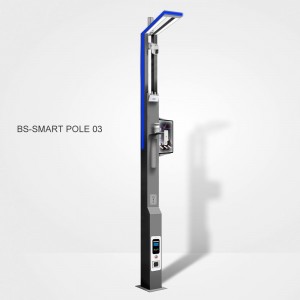
Gebosun Smart Pole 03 for Smart City
-
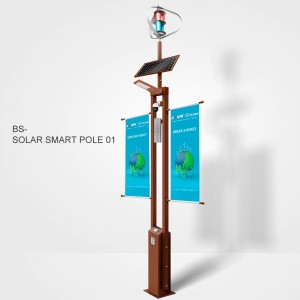
Gebosun Solar Smart pole 01
-

Smart City Pole Modularity: The MP15 Smart Pole...
-

Smart Pole17 Integrated Lighting and EV Chargin...
-

Smart Pole18 with IoT Remote Monitoring for Bus...
