
Key Developments from the Smart Pole Industry News
According to recent industry data, the global smart pole market is experiencing exponential growth, projected to expand from USD 10.8 billion in 2022 to over USD 132 billion by 2030. This growth is primarily driven by the urgent need for urban infrastructure modernization, the densification of 5G networks, and the broader integration of the Internet of Things (IoT).

Recent developments from 2024 to 2025 demonstrate the diverse, global nature of this deployment. In telecommunications, Huawei and Unilumin Group launched a “Smart Pole Site Joint Solution” at MWC Barcelona 2024 to accelerate digital transformation. Geographically, deployments are spanning both greenfield and brownfield environments:
China: Signify is executing a large-scale LED smart pole project in Huanggang City aimed at reducing carbon emissions.
United States: LG CNS is installing EV-charging-capable smart poles in Hogansville, Georgia.
Indonesia: A pilot program by Tehomet and Wapice has proven successful for future large-scale rollouts, notably in the new capital city of Nusantara.
South Korea: Seoul continues to integrate 5G, surveillance, and Wi-Fi into its street lighting infrastructure.
Sustainability: Companies like Omniflow are deploying solar-powered, eco-friendly networks in Portugal to reduce reliance on local power grids.
Crucially, the market is undergoing a structural transition: authorities are moving away from simply retrofitting existing infrastructure toward commissioning new, fully integrated smart pole installations.
The intersection of telecommunications, renewable energy, and public lighting is fundamentally rewriting urban infrastructure playbooks. Recent solar industry news highlights a massive acceleration in the global smart pole market, signaling a permanent shift in how municipalities and EPC (Engineering, Procurement, and Construction) contractors approach street lighting deployments.
Industry Interpretation and Secondary Impacts
For municipal planners, infrastructure consultants, and EPCs, these developments signal a paradigm shift in urban design. A street light is no longer a single-purpose utility asset; it is a multi-tenant digital real estate platform.
This transition fundamentally alters public procurement criteria. Tender specifications are shifting from basic photometric requirements (lumens-per-watt) to complex, multi-disciplinary benchmarks encompassing data throughput, edge computing capacity, and structural payload limits. Municipalities can no longer silo their budgets. The deployment of a smart pole network requires cross-departmental financial structuring, merging capital from the Department of Transportation (for EV charging and traffic monitoring), IT departments (for public Wi-Fi and 5G leasing), and Public Safety (for surveillance and gunshot detection).
Furthermore, the shift from retrofitting to new installations is a direct result of engineering constraints. Traditional light poles lack the internal cavity space for fiber backhaul, the foundation strength for increased wind loads, and the electrical conduit sizing required to power multi-kilowatt IoT and charging payloads. Greenfield integrated installations are becoming the pragmatic choice to bypass the severe limitations of legacy infrastructure.
Implications for Urban and Public Lighting Infrastructure
The integration of 5G small cells, environmental sensors, and EV charging stations drastically changes the power profile of public infrastructure. A traditional LED luminaire may draw 50 to 150 watts at night. A modern smart pole—equipped with an active 5G mmWave node, edge computing processors, and a Level 2 EV charger—can draw continuous multi-kilowatt loads, 24 hours a day.
This creates a significant strain on existing urban electrical grids. The news highlighting Omniflow’s solar-powered networks in Portugal points to a critical infrastructure adaptation: hybridizing smart poles with solar generation. In regions like the US and Europe, where grid upgrades are costly and heavily regulated, integrating solar street lighting technologies with localized battery storage is becoming essential to offset the massive energy demands of always-on IoT and telecom equipment.
Geographic context dictates deployment strategies. In new urban developments like Indonesia’s Nusantara, infrastructure planners have the luxury of laying high-capacity fiber and power grids specifically designed for smart poles. Conversely, in older cities like Seoul or municipalities in Georgia, deploying smart poles requires advanced localized energy management to ensure EV charging capabilities do not overwhelm the local distribution transformers.
Project & System Experience
As a dedicated manufacturer of solar street lights and smart pole system solutions, our engineering teams deal directly with the physical realities of integrating these vast technology stacks into a single vertical structure. Designing a viable smart pole is an exercise in extreme mechanical and electrical engineering trade-offs.
Our project deployment experience dictates that structural integrity is the foremost challenge. Appending surveillance cameras, solar arrays, and telecom radomes to a pole significantly increases its Effective Projected Area (EPA). To prevent catastrophic failure during severe weather, our manufacturing process utilizes high-yield-strength carbon or extruded aluminum, coupled with widened foundation bolt circles specifically engineered to handle regional wind load profiles.
Thermal management is another critical factor we engineer into our systems. 5G small cells and edge computing units generate substantial localized heat. We design our smart pole extrusions with passive thermal dissipation channels to ensure that the sensitive electronics—and crucially, the localized battery storage required for solar-powered operation—are protected from thermal runaway. Furthermore, sizing the battery chemistry (such as advanced LiFePO4 modules) to handle the continuous parasitic draw of environmental sensors and cameras, while reserving sufficient autonomous power for mission-critical lighting, requires precise, climate-adapted system sizing.
Technology and Product Direction Aligned with the Trend
The industry is moving rapidly toward modular architecture and standardized interoperability. Because the lifecycle of telecommunications and IoT hardware (typically 3 to 5 years) is vastly shorter than the structural lifespan of a steel or aluminum pole (20 to 30 years), our product development focuses on modular payload bays.
By utilizing standardized mounting interfaces (such as Zhaga-D4i nodes) and internal plug-and-play power rails, we enable municipalities to swap out outdated 5G nodes or upgrade environmental sensors without replacing the entire physical infrastructure. Additionally, our integration of advanced Energy Management Systems (EMS) allows the pole to dynamically balance solar energy generation with grid power, intelligently throttling non-critical sensor loads during grid outages to guarantee uninterrupted public safety lighting and emergency communications.
FAQs About Smart Pole Trends
Why is the market shifting from retrofitting existing streetlights to deploying fully integrated new smart poles?
Legacy street light poles were engineered strictly to hold a lightweight luminaire. They lack the internal cavity space for fiber optic cabling, the structural foundation to withstand the wind load of added antennas and sensors, and the thermal management required for computing equipment. Fully integrated new installations eliminate these bottlenecks.
How do solar energy and battery storage improve the resilience of smart pole networks?
By incorporating solar panels and advanced battery storage (like LiFePO4), smart poles can maintain mission-critical functions—such as emergency lighting, gunshot detection, and police communication buttons—even during catastrophic grid outages or natural disasters.
What are the primary structural engineering challenges when designing smart poles for coastal or high-wind urban areas?
Adding hardware like telecom radomes, solar panels, and digital signage increases the pole’s Effective Projected Area (EPA), effectively acting as a sail. Manufacturers must use high-yield-strength materials, advanced vibration dampening, and custom foundation engineering to ensure the pole meets local wind-load safety ratings.
How should municipal procurement teams approach the lifecycle differences between the physical pole and the mounted IoT technology?
Procurement teams should mandate modular architectures in their tender specifications. While the physical pole will last 20–30 years, 5G and camera technology will become obsolete in 3–5 years. Specifying standardized interfaces (like Zhaga-D4i) ensures technology can be swapped out easily without replacing the entire heavy infrastructure.
Post time: Feb-11-2026
Products categories
-
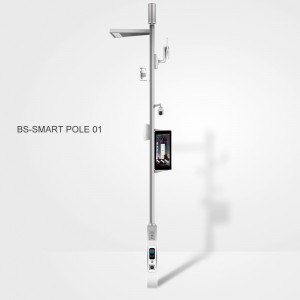
Gebosun Smart Pole 01 for Smart City
-

Smart City Pole Modularity: The MP15 Smart Pole...
-

Smart Pole17 Integrated Lighting and EV Chargin...
-

Smart Pole18 with IoT Remote Monitoring for Bus...
-
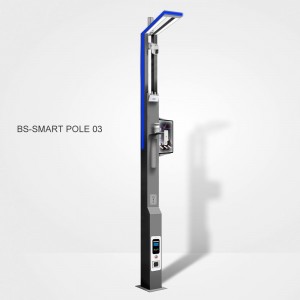
Gebosun Smart Pole 03 for Smart City
-
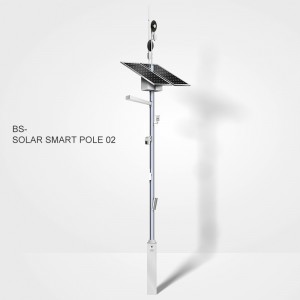
Gebosun BS-Solar Smart Pole 02 & Smart City
-

Future-Proof NEMA Controller for Smart Street L...
-
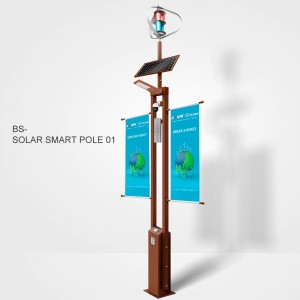
Gebosun Solar Smart pole 01
