
Transforming Urban Light with Smart Street Lighting: The Backbone of Modern Smart Cities
Urban lighting has always been a critical element of city infrastructure, shaping not only the aesthetics of public spaces but also public safety, energy consumption, and environmental sustainability. Traditionally, urban light has relied on grid-powered incandescent or high-pressure sodium lamps. While effective at providing illumination, these conventional lighting systems are increasingly recognized as inefficient, expensive, and unsustainable.
The rise of smart street light technology is revolutionizing the way cities illuminate their streets, offering scalable solutions that integrate renewable energy, IoT capabilities, and adaptive urban light design. This article provides a comprehensive professional insight into how smart street lights, particularly solar-powered LED systems, outperform traditional urban light installations and contribute to the realization of smart city infrastructures.
Current Urban Light Systems: Efficiency Challenges and Drawbacks
Conventional urban light systems are mostly dependent on centralized electricity grids powered by non-renewable energy sources. These systems often suffer from multiple limitations:
- Efficiency Challenges
Traditional lighting uses incandescent bulbs or high-pressure sodium lamps with efficiency ranging between 50–70 lumens per watt. Continuous operation during low-traffic periods leads to significant energy waste. Municipal budgets are further strained by high electricity bills and frequent lamp replacements.
- Environmental and Economic Impacts
Grid-powered lights contribute to CO₂ emissions, which exacerbate urban pollution and climate change. The operational cost of maintaining conventional street lighting is high, negatively impacting municipal profit and economic efficiency. Countries like the United Arab Emirates (UAE) have started focusing on energy-efficient urban lighting to reduce carbon footprints while maintaining public safety.
- Limitations in Urban Planning
Conventional urban lights lack adaptive control, data collection, and connectivity. These features are crucial for smart city integration and modern urban management. Cities cannot leverage real-time data for planning, predictive maintenance, or safety monitoring using outdated lighting infrastructure.
Smart Street Lights: Definition and Key Features
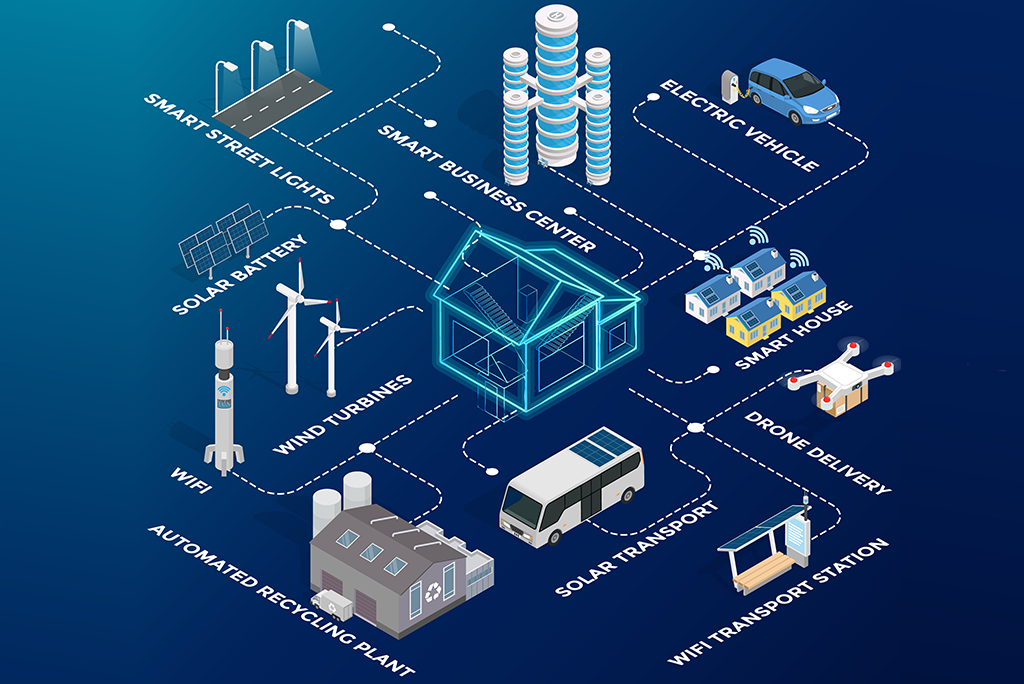
A smart street light integrates LED illumination with IoT sensors, solar or hybrid energy sources, and advanced control systems. Key features include:
Energy Efficiency: LEDs paired with solar or hybrid energy systems can reach 120–180 lumens per watt, significantly higher than traditional systems.
Adaptive Lighting: Motion sensors and time-based schedules allow lights to dim or brighten based on real-time traffic conditions.
IoT Integration: Smart street lights collect environmental and traffic data, feeding into city dashboards for urban analytics.
Renewable Energy: Solar-powered street lights utilize abundant sunlight, reducing reliance on grid electricity and lowering operational costs.
BOSUN Lighting (Gebosun is the sub-brand), a leading solar street light company, offers solutions that combine solar-powered LED street lights with smart controllers for adaptive urban illumination. Their systems support off-grid installation, all-in-one solar street lights, and commercial solar street lighting applications, making them ideal for both urban and remote locations.
Urban Light Design in Smart Cities
- Principles of Smart Urban Light Design
Effective urban lighting design focuses on four main pillars: energy efficiency, safety, aesthetics, and connectivity. Cities are increasingly using adaptive street lighting to optimize brightness levels according to traffic, pedestrian movement, and environmental conditions.
The integration of smart street lights into smart city projects provides measurable economic benefits. Smart lighting ROI calculators show a typical payback period of 3–5 years, factoring in electricity savings, reduced maintenance, and improved public safety. By adopting solar-powered LED street lights, cities can reduce operational expenses while contributing to sustainability goals.
Comparative Analysis: Smart Street Lights vs. Conventional Urban Lights
| Feature | Conventional Urban Light | Smart Street Light |
|---|---|---|
| Energy Source | Grid electricity (non-renewable) | Solar or hybrid renewable energy |
| Efficiency | 50–70 lumens/W | 120–180 lumens/W |
| Maintenance | Frequent lamp replacement | Low maintenance, 50,000+ hours LED lifespan |
| Operational Cost | High electricity bills | Minimal, zero-grid electricity cost |
| Control | Manual, limited | IoT-enabled, adaptive, remote control |
| Integration | Low | Full smart city integration |
| ROI | Long payback | 3–5 years |
Technical Aspects: Installation and IoT Integration
- Installation and Wiring
Traditional urban lights require extensive cabling, trenching, junction boxes, and professional installation. In contrast, smart street lights, especially solar-powered options, are plug-and-play, wireless, and often off-grid. This allows rapid deployment in new developments or remote areas with minimal disruption.
- IoT and Data Management
Smart city data management is facilitated by IoT-enabled smart street lights. Sensors embedded in the lighting system collect real-time data on traffic, weather, and energy consumption. This data can feed smart city dashboards, optimize energy use, and predict maintenance needs, making urban light management both efficient and future-ready.
Global Perspectives: UAE and Other Smart City Examples
The UAE has emerged as a pioneer in smart urban lighting. Cities like Dubai and Abu Dhabi implement BOSUN Lighting's smart street light systems to optimize energy efficiency and safety. These initiatives contribute to the UAE’s sustainability goals, support smart city projects, and improve urban profit economics by lowering operational costs.
Integration with Outdoor and Battery Technologies
Modern solar street lights integrate electric battery storage to maintain illumination during low-sunlight periods. Hybrid systems can combine solar with traditional grid power for maximum reliability. Compared to competitors like Jackery and Ring, we focus on urban lighting efficiency, professional-grade installation, and large-scale smart city applications rather than consumer-focused portable devices.
Economic and Environmental Implications
- Economic Benefits
70–90% reduction in energy bills.
Minimal maintenance reduces operational expenses.
Extended lifespan of LEDs reduces replacement costs.
- Environmental Benefits
Significant reduction in carbon emissions.
Zero grid dependence for solar systems.
Supports city-wide sustainability initiatives.
FAQs About Urban Light and Smart Street Lights
What is a smart street light?
IoT-enabled, energy-efficient lights that adapt brightness, collect data, and integrate with smart city infrastructure.
How does smart street lighting compare to conventional urban light?
Smart street lights use solar or hybrid energy, reducing electricity consumption by up to 90%, while providing adaptive and safer illumination.
What is the ROI for commercial solar street lighting?
ROI typically ranges from 3–5 years, depending on electricity cost savings, maintenance reduction, and system efficiency.
How do smart street lights work?
They use LED lamps powered by solar energy, with LiFePO₄ battery storage and IoT-enabled controllers for adaptive lighting and data collection.
Are smart street lights suitable for remote or off-grid locations?
Yes, solar-powered smart street lights can operate independently without grid access, making them ideal for remote regions.
How long do solar street light batteries last?
High-quality LiFePO₄ batteries typically last 5–7 years with proper maintenance.
Can smart street lights integrate with city data management systems?
Yes, sensors collect traffic, environmental, and energy data, feeding city dashboards for predictive maintenance and urban planning.
What are the environmental advantages of smart street lights?
They reduce carbon emissions, lower energy consumption, and minimize waste from frequent lamp replacements.
How does the installation of smart street lights compare to conventional urban lights?
Installation is faster, often plug-and-play, and does not require extensive wiring or trenching.
Which regions benefit most from smart street lights?
Urban and suburban areas with high solar irradiation, remote locations, and smart city initiatives, such as cities in the UAE, Europe, and the U.S.
Post time: Dec-25-2025
Products categories
-
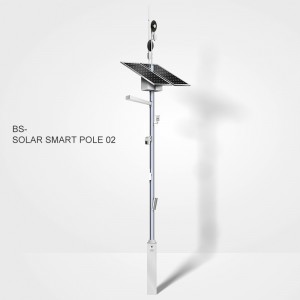
Gebosun BS-Solar Smart Pole 02 & Smart City
-
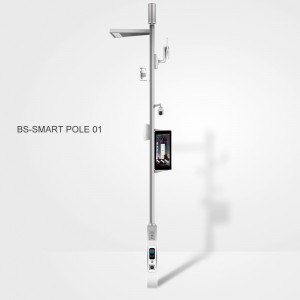
Gebosun Smart Pole 01 for Smart City
-
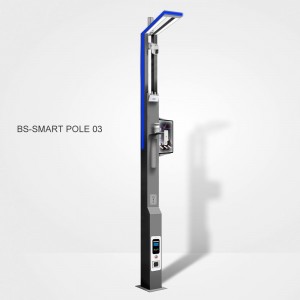
Gebosun Smart Pole 03 for Smart City
-

Smart City Pole Modularity: The MP15 Smart Pole...
-

Smart Pole17 Integrated Lighting and EV Chargin...
-

Smart Pole18 with IoT Remote Monitoring for Bus...
-
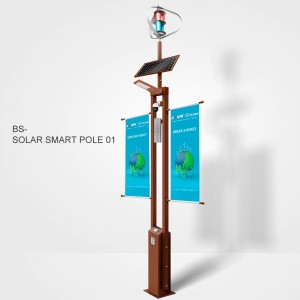
Gebosun Solar Smart pole 01
-
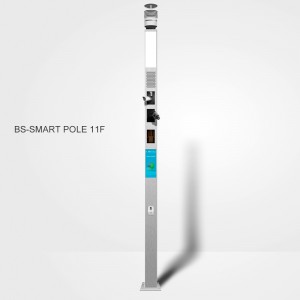
Gebosun® 11Y&11F Model Smart Pole for Smar...
