
Why Smart Cities Are No Longer Optional
Cities are facing unprecedented pressure. Rapid urbanization, climate change, aging infrastructure, and rising energy demand are pushing traditional city models to their limits. In response, the concept of the smart city has moved from theory to necessity. A smart city utilizes data, digital technologies, and intelligent infrastructure to enhance efficiency, sustainability, public safety, and quality of life, such as the Gebosun SCCS (Smart City Control System), which is convenient for people.
From Los Angeles smart city initiatives ahead of the 2028 Olympics to experimental developments such as Bill Gates’smart city project, governments and private investors are accelerating toward a shared goal: building cities that are digitally connected, energy-efficient, and resilient.
This article provides a professional, structured analysis of what smart cities really mean, how smart city data management works, the role of big tech and smart cities, and how global projects align with the smart city project 2030 agenda.
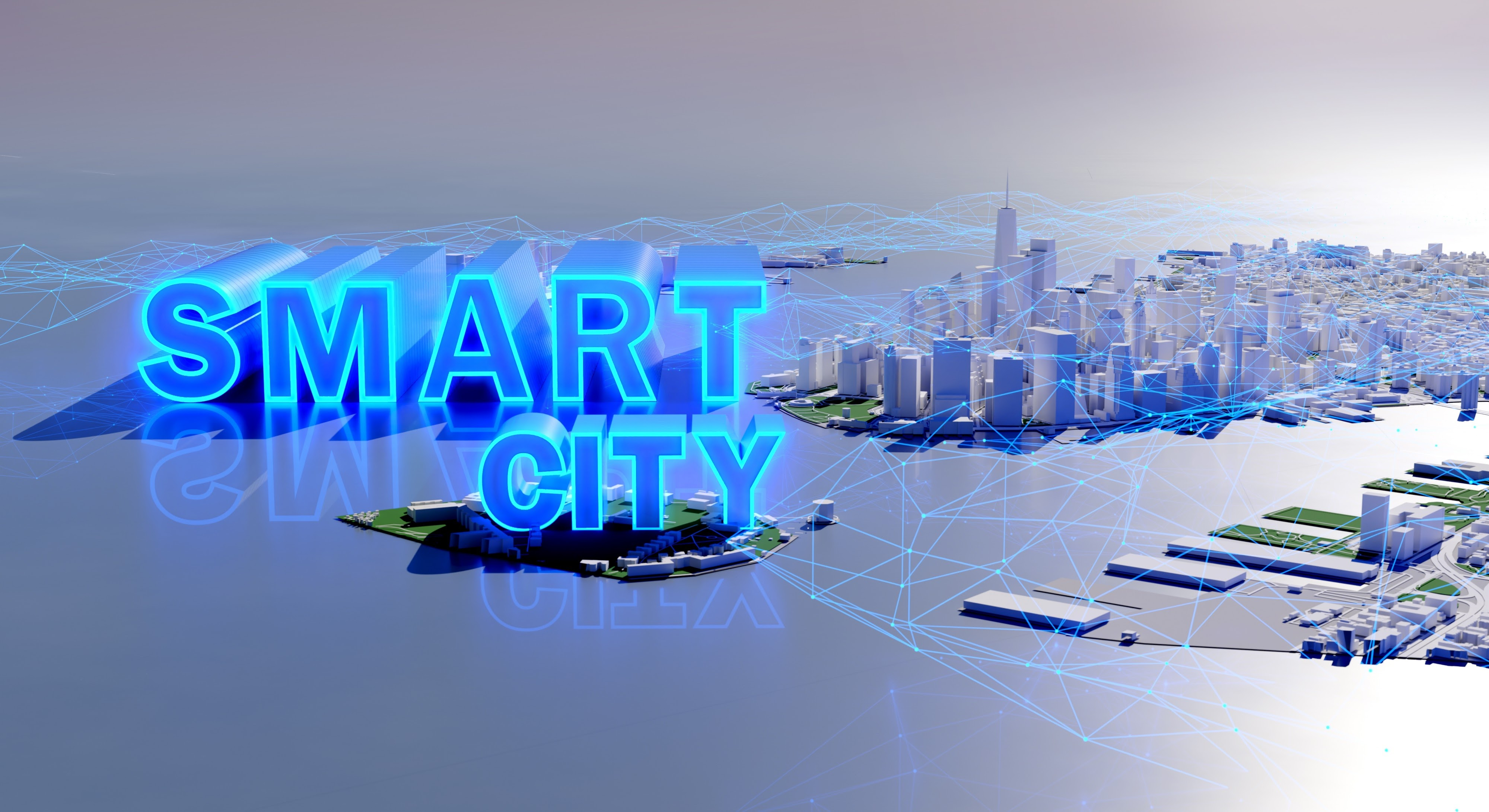
What Is the Meaning of a Smart City?
At its core, the meaning of a smart city goes far beyond technology gadgets or surveillance systems. A smart city integrates physical infrastructure, digital networks, and human systems using data as the central operating layer.
A modern smart city typically includes:
- Smart energy systems (renewables, storage, smart grids)
- Smart mobility (traffic optimization, EV infrastructure)
- Smart public services (lighting, waste, safety)
- Smart governance (real-time data decision-making)
- Citizen-centric digital platforms
The objective is not automation alone, but measurable improvements in efficiency, sustainability, and livability.
Smart City Data Management: The Digital Backbone
Smart city data management is the foundation that enables cities to function intelligently. Sensors, cameras, meters, and IoT devices generate massive amounts of real-time data across transportation, energy, environment, and public services.
This data is used to:
- Predict traffic congestion before it occurs
- Optimize energy consumption in public lighting
- Detect infrastructure failures early
- Improve emergency response times
- Guide long-term urban planning
- From Raw Data to Action
- Effective smart cities rely on:
- Cloud and edge computing
- AI-driven analytics
- Cybersecurity frameworks
- Interoperable platforms across departments
Without robust data governance, smart city projects risk becoming fragmented or inefficient.
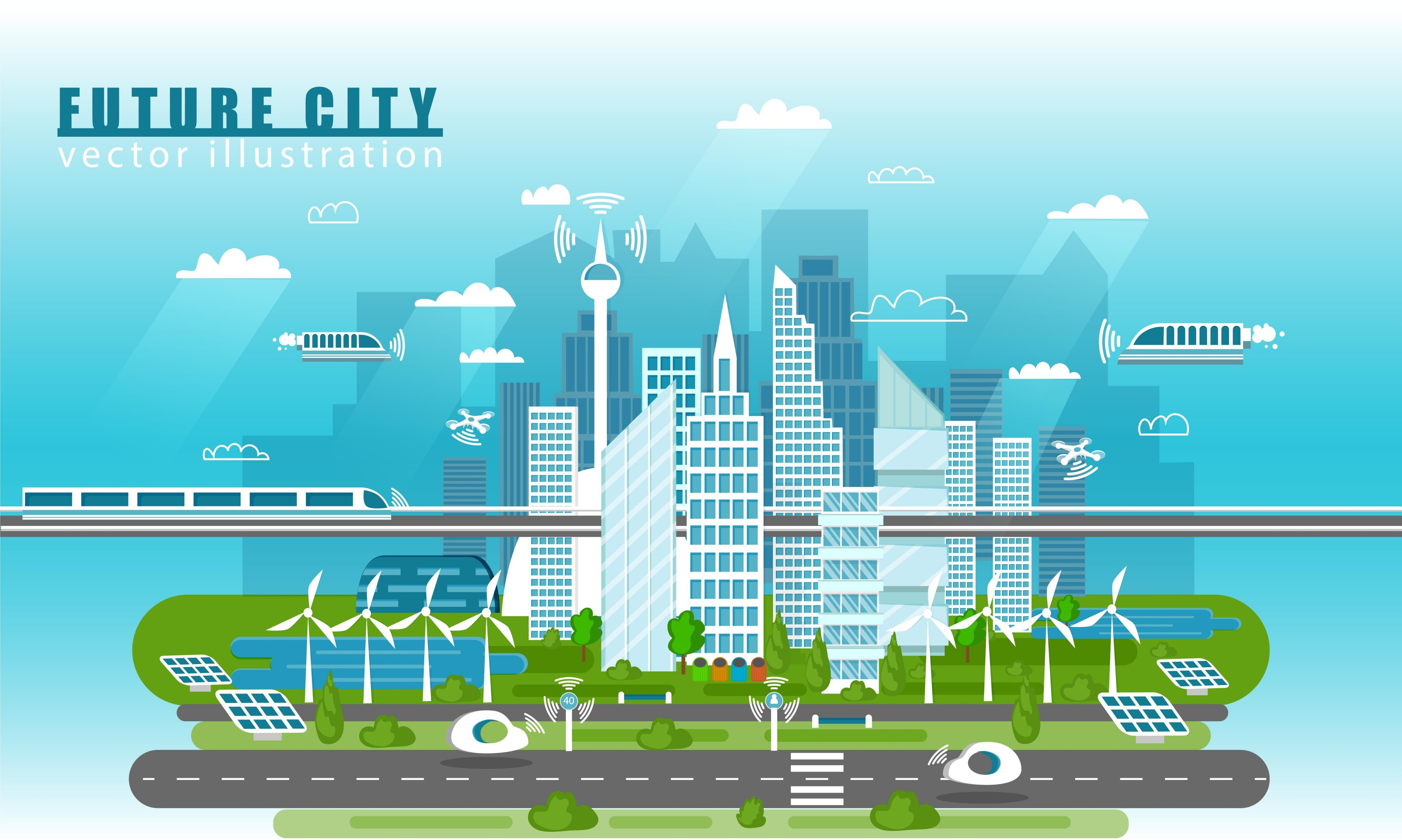
Los Angeles Smart City: A Real-World Mega-City Example
LA Smart City 2028 Vision
The Los Angeles smart city program has gained global attention, especially as the city prepares to host the 2028 Olympic Games. The goal is to transform LA into a model of smart mobility, sustainability, and digital governance.
Key focus areas include:
- AI-driven traffic management
- Smart street lighting with adaptive LED systems
- EV charging infrastructure
- Open data platforms for public engagement
Why LA Matters
As one of the world’s most complex urban environments, Los Angeles demonstrates how smart city technologies can scale, proving they are not limited to small pilot cities.
Bill Gates’Smart City: A Purpose-Built Urban Experiment
What Is Bill Gates’ Smart City?
One of the most discussed private smart city initiatives is Bill Gates’ smart city project in Belmont, often referenced as a next-generation urban development planned from the ground up.
Unlike retrofitted cities, this project emphasizes:
- Integrated digital infrastructure from day one
- Renewable energy systems embedded into city design
- Advanced data-driven urban planning
- Mixed-use development combining residential, commercial, and research zones
When Will Bill Gates’ Smart City Be Finished?
A common question is: when will Bill Gates’ smart city be finished?
While timelines vary depending on regulatory approvals and phased development, the project is widely understood to align with 2030 smart city development goals, making it a reference point for future urban planning.
Why This Project Matters
Bill Gates’smart city is significant not because of celebrity, but because it demonstrates:
- Long-term private capital commitment
- Technology-first urban design
- Integration of energy, mobility, and data systems
- Alignment with climate and sustainability targets
Smart City Project 2030 Agenda: Global Alignment
Across continents, governments are aligning urban development with the smart city project 2030 agenda, which closely connects to:
- Carbon neutrality goals
- Sustainable Development Goals (SDGs)
- Resilient infrastructure investment
- Digital inclusion
By 2030, smart cities are expected to:
- Reduce urban energy consumption by 20–30%
- Cut public lighting energy use by up to 70% using LED and solar systems
- Improve emergency response times through real-time data
- Enable cleaner transportation systems
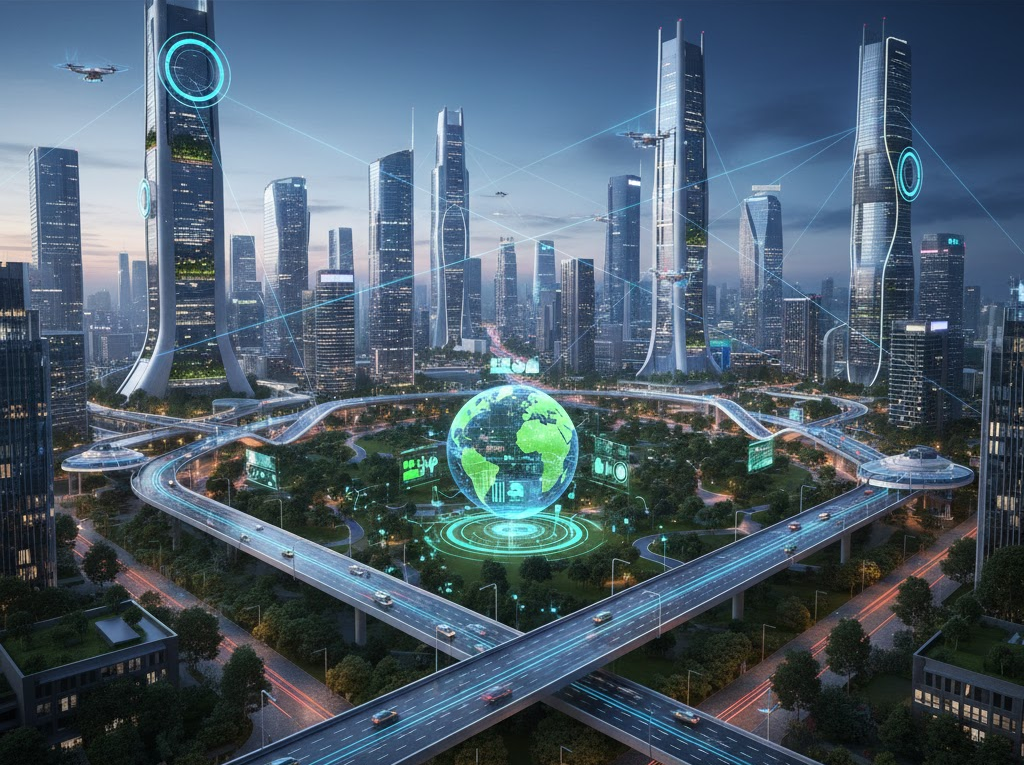
The Role of Smart Pole Infrastructure: Lighting as a Gateway Technology
While smart cities encompass many systems, smart street lighting is often the first large-scale deployment. Why?
- High visibility
- Immediate energy savings
- Fast ROI
- Easy integration with sensors and communication nodes
Smart lighting systems act as urban data carriers, supporting:
- Environmental monitoring
- Traffic sensing
- Public safety systems
- Future 5G or IoT expansion
The Future of Smart Cities: From Vision to Standard Practice
The evolution of smart cities reflects a fundamental shift in how humanity designs urban life. From Los Angeles smart city initiatives to Bill Gates’ forward-looking urban experiment, the message is clear: the future city is data-driven, energy-efficient, and citizen-focused.
As we move toward the 2030 smart city agenda, successful cities will not be defined by technology alone, but by how intelligently they integrate innovation with sustainability, governance, and human needs.
Projects like LA Smart City 2028 and Bill Gates’smart city serve as reference frameworks that other cities—large and small—can adapt to their local context.
FAQs about Smart City
What is a smart city example?
Examples include Los Angeles (USA), Singapore, Barcelona, and emerging purpose-built projects like Bill Gates’ smart city initiative.
What is the meaning of a smart city?
A smart city uses data, digital technology, and connected infrastructure to improve efficiency, sustainability, and quality of life.
What is smart city planning?
Smart city planning integrates technology, energy systems, transportation, and governance into long-term urban development strategies.
When will Bill Gates’ smart city be finished?
The project is expected to progress in phases aligned with 2030 smart city development goals, though exact completion dates vary.
Is smart city locating legit?
It can be legitimate when supported by transparent data, GIS tools, and public partnerships, but users should evaluate credibility carefully.
What role does data play in smart cities?
Data enables real-time decision-making, predictive maintenance, and efficient resource management.
How does big tech influence smart cities?
Big tech provides platforms and tools, but cities must manage privacy, governance, and long-term control.
Post time: Dec-23-2025
Products categories
-

Future-Proof NEMA Controller for Smart Street L...
-

Gebosun BS-Solar Smart Pole 02 & Smart City
-

Gebosun Smart Pole 01 for Smart City
-
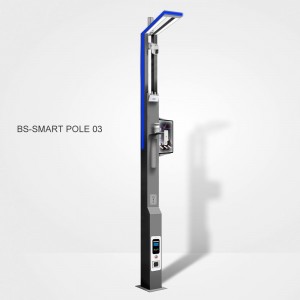
Gebosun Smart Pole 03 for Smart City
-
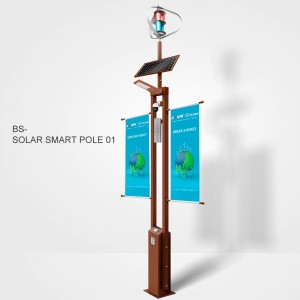
Gebosun Solar Smart pole 01
-

Gebosun® 11Y&11F Model Smart Pole for Smar...
-

Smart City Pole Modularity: The MP15 Smart Pole...
-

Smart Pole17 Integrated Lighting and EV Chargin...
